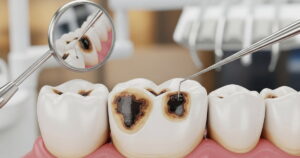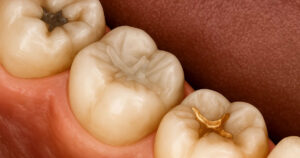
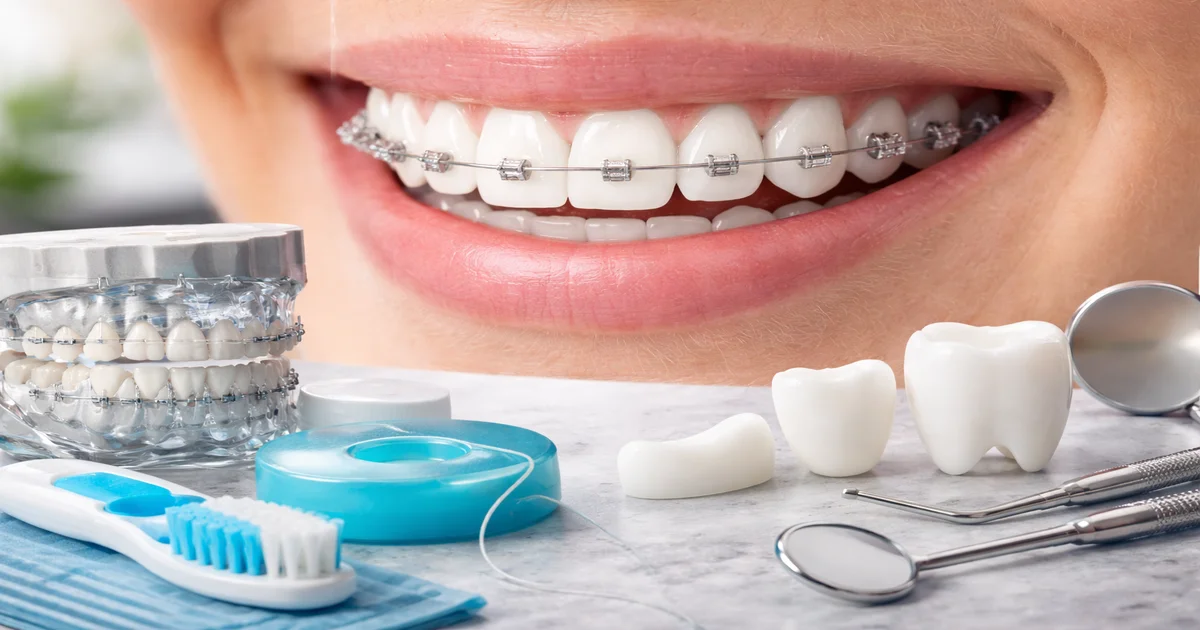

Can we get braces with crowns or veneers? This is a very common question among patients who seek orthodontic treatments on restored teeth.
In this article, we will explain how braces interact with crowns and veneers, whether Invisalign may be a better option, the potential risks involved, and how proper treatment planning can make orthodontics safe for patients with prior restorative or cosmetic dentistry.
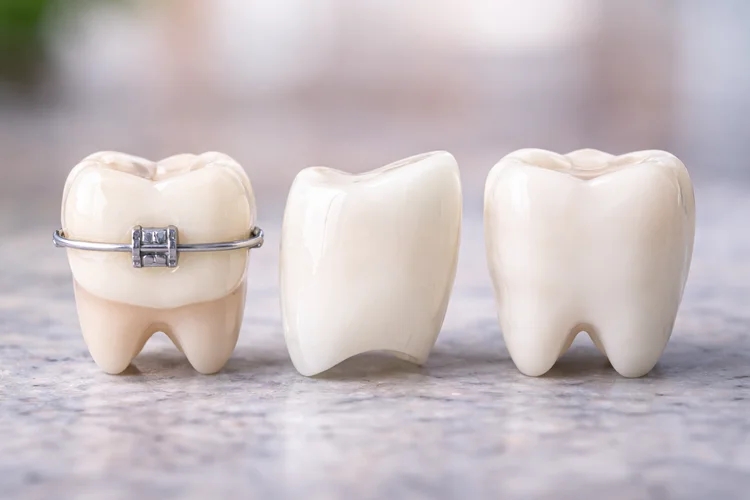
Can You Get Braces if You Have Crowns or Veneers?
The simple answer is: Yes, you can get braces if you have crowns or veneers. Orthodontic treatment is often safe and effective on restored teeth, provided it is properly planned and executed.
At Danforth Dental Centre, we evaluate your existing dental crowns, dental veneers, and overall bite before recommending braces or clear aligners to ensure your restorations remain protected.
Now that we have the answer to this frequently asked question, let’s dive deeper and see how braces exactly work on teeth with crowns and veneers.

Book Your Consultation Now
How Braces Work on Teeth With Crowns or Veneers
Orthodontic tooth movement occurs at the root level within the bone. Crowns and veneers sit on top of the tooth structure, so movement is still biologically possible. However, the way brackets attach to restored surfaces requires a different approach.
Attaching Brackets to Crowns and Veneers
Brackets do not bond to porcelain or ceramic as well as they bond to natural enamel. Special bonding protocols and surface-preparation techniques are used to achieve secure attachment without damaging the restoration. When done properly, brackets can be safely removed at the end of treatment without harming the crown or veneer.
Differences Between Natural Enamel and Restorations
Natural enamel allows strong mechanical bonding. Porcelain and ceramic restorations require modified adhesives and careful handling. This is why orthodontic treatment on restored teeth should be coordinated with a dentist experienced in both orthodontics and restorative dentistry.
How Orthodontists Protect Existing Dental Work
When orthodontic treatment involves crowns or veneers, protection is intentional and systematic. Here is how it is managed clinically:
- Comprehensive Evaluation of Existing Restorations
Every crown and veneer is assessed for integrity, marginal fit, underlying decay, and structural stability. Any compromised restoration is addressed before orthodontic movement begins. - Material Identification
Porcelain, zirconia, and composite restorations behave differently. Identifying the material determines how brackets can be safely bonded and later removed. - Modified Bonding Technique
Bonding protocols are adjusted for restored surfaces. Surface preparation and adhesive selection are carefully controlled to ensure secure attachment without damaging the restoration. - Controlled Orthodontic Force Application
Restored teeth are moved using carefully calibrated forces. Excessive pressure increases the risk of debonding or restoration stress, so biomechanics are adjusted accordingly. - Ongoing Bite Monitoring
As teeth shift, the bite changes. Regular occlusal checks prevent newly aligned teeth from placing traumatic forces on crowns or veneers. - Post-Treatment Reassessment
After alignment is complete, restorations are re-evaluated to confirm proper contact points, functional harmony, and aesthetic integration.
Orthodontic treatment with existing dental work is not about avoiding risk entirely; it is about managing it intelligently and predictably.
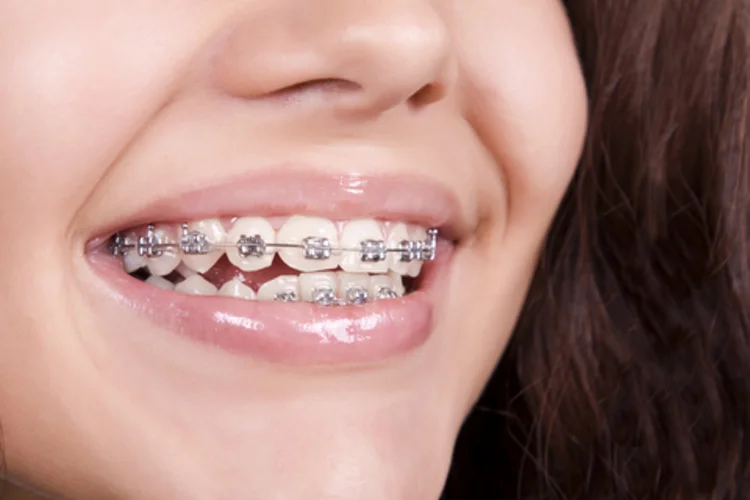
Are Clear Aligners a Better Option Than Veneers or Crowns?
In many cases, Invisalign can be a more conservative option for patients who already have veneers or crowns. Clear aligners do not require bonded brackets and therefore reduce the risk of surface damage during removal.
However, aligners are not automatically safer. Their effectiveness depends on the complexity of tooth movement required. For mild to moderate alignment concerns, Invisalign can be an excellent choice. For more complex bite corrections, traditional braces may offer better control.
The decision depends on the condition of your restorations and your overall treatment goals.
Read more: Types of Dental Veneers
Ask Us About Orthodontics And Restorative Dentistry
If you have crowns or veneers and are considering orthodontic treatment, schedule a consultation at Danforth Dental Centre. We will assess your restorations, bite alignment, and treatment goals to determine the safest and most effective option for your smile.
Risks of Orthodontic Treatment on Restored Teeth
When properly planned, risks are low. That said, possible concerns include:
- Bracket detachment from porcelain surfaces
- Minor surface changes during bracket removal
- Increased pressure on older restorations
- The need to replace worn crowns after alignment changes
These risks are minimized when orthodontic treatment is integrated with cosmetic dentistry and restorative evaluation from the beginning.
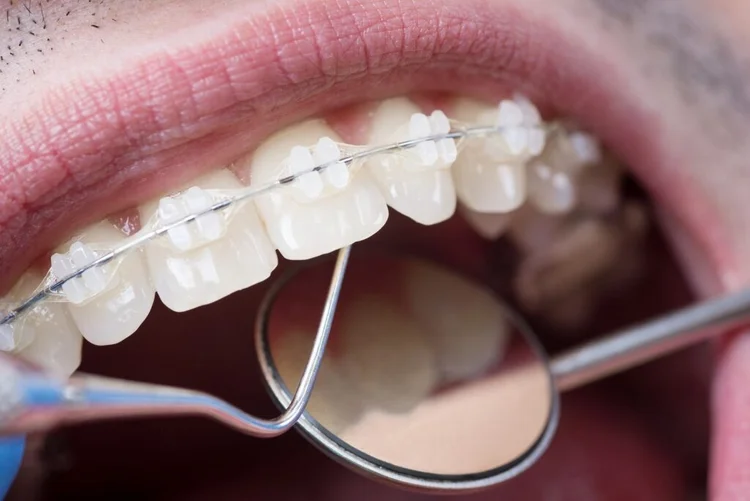
When Braces May Not Be Recommended
Although orthodontic treatment is often possible for patients with crowns or veneers, there are situations where braces may not be the safest or most predictable option. A careful clinical evaluation is essential before proceeding. Braces may not be recommended in the following cases:
- Failing or unstable restorations
If existing crowns or veneers are loose, cracked, poorly fitted, or have recurrent decay underneath, orthodontic forces can worsen the condition. - Advanced gum disease or bone loss
Teeth affected by periodontal instability may not tolerate orthodontic movement safely without prior periodontal treatment. - Severely compromised tooth structure
Teeth with minimal remaining natural structure under a crown may not withstand additional orthodontic stress. - Extremely thin or delicate veneers
Some cosmetic veneers are designed primarily for aesthetics and may not tolerate bracket bonding or orthodontic pressure. - Complex bite discrepancies require restorative correction first
In cases where major bite rehabilitation is needed, restorative or prosthodontic treatment may need to precede orthodontics.
In these situations, treatment is not automatically ruled out. Instead, we reassess sequencing. Addressing periodontal health, replacing compromised restorations, or planning interdisciplinary care may allow orthodontic treatment to be performed safely at a later stage.
Read more: Dental Veneers vs. Laminates
Planning Orthodontic Treatment Around Existing Restorations
Successful orthodontic treatment with crowns or veneers starts with a comprehensive diagnosis. This includes digital imaging, bite analysis, and evaluation of all previous dental work.
The NIH says:
“In conclusion, this case report underscores the benefits of an interdisciplinary approach with orthodontic and restorative care to significantly improve patient occlusion and satisfy esthetic demands.”
In some cases, veneers placed years ago may need replacement after alignment changes to maintain cosmetic harmony. In other cases, restorations remain completely intact throughout treatment.
The key is sequencing. Orthodontic movement and restorative dentistry must be coordinated rather than treated separately.
Book Your Consultation Now
Align Your Smile Without Damaging Crowns Or Veneers
Braces are not automatically ruled out if you have crowns or veneers. With proper planning, modified bonding techniques, and careful monitoring, orthodontic treatment can safely improve alignment without compromising your existing dental work.
At Danforth Dental Centre, we evaluate both function and aesthetics before recommending treatment. Whether you need braces, Invisalign, restorative adjustments, or cosmetic refinements, your treatment plan is designed to protect your investment and improve your long-term oral health.
FAQ
Before starting orthodontic treatment, patients often have specific concerns about how braces interact with existing restorations. Here are clear answers to the most common questions.
-
Can braces damage crowns or veneers?
When placed and removed properly, braces should not damage crowns or veneers. Special bonding techniques are used to protect porcelain surfaces.
-
Is Invisalign safer than traditional braces with veneers?
In some cases, yes. Invisalign uses clear aligners rather than bonded brackets, reducing surface stress. However, treatment suitability depends on the complexity of the required alignment.
-
Will crowns need to be replaced after braces?
Not always. If the crown remains functional and aesthetic after alignment, it can stay in place. Replacement is only considered if bite changes affect fit or appearance.
Do you currently have crowns or veneers and are unsure about braces?
Share your questions below
We are happy to guide you.